

Newsletter
Copyright and Fair Trade Act Issues Concerning Promotional Giveaways at Sporting Events
Enterprises often provide functional backpacks as free giveaways at large-scale sporting events and similar activities. In some cases, disputes have arisen over claims that such backpacks resemble existing functional outdoor backpacks available on the market, thereby giving rise to concerns regarding copyright infringement or unfair competition. Regarding this issue, the analysis and findings made by the Intellectual Property and Commercial Court (the “IPC Court”) in its civil judgment 114-Min-Zhu-Su-Zi No. 89 dated April 29, 2026 may be noteworthy.
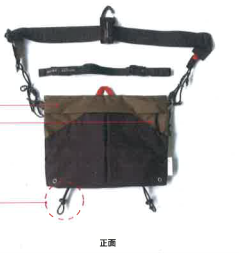
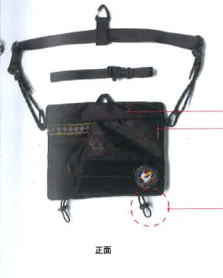
In the abovementioned case, the plaintiff was an outdoor functional accessories brand that designed and sold a functional backpack utilizing straps, adjustment buckles, a bag opening structure, and left-and-right drawstring styling to create associations with mountaineering and camping (the “Plaintiff’s Product”). The plaintiff asserted that the Plaintiff’s Product constituted an artistic work protected under the Copyright Act, and that a bag provided by the defendant to participants in a triathlon event organized by the defendant (the “Product at Issue”) had an appearance design similar to that of the Plaintiff’s Product, thereby infringing the plaintiff’s reproduction right. In addition, the plaintiff argued that both the Plaintiff’s Product and the Product at Issue targeted sports consumers, and that the defendant’s conduct had caused consumer confusion or mistaken association, thereby constituting deceptive or obviously unfair conduct sufficient to affect trading order under Article 25 of the Fair Trade Act. However, in the above judgment, the IPC Court rejected all of the plaintiff’s assertions.
With respect to the issue of copyright infringement, in determining whether the design of the Plaintiff's Product constituted an artistic work protected under the Copyright Act, the IPC Court primarily considered whether such design expressed thoughts or emotions through artistic techniques, or whether such product merely possessed practical functionality for the purpose of ensuring the product’s functions. Accordingly, based on the fact that the principal purpose of the overall shape and design of the Plaintiff’s Product was to facilitate carrying items and to effectively perform the practical function of storing items in the backpack, rather than expressing thoughts or emotions through artistic techniques, and further considering that the backpack design was a commonly seen style generally available on the market, the IPC Court determined that the Plaintiff’s Product did not constitute an artistic work protected under the Copyright Act.
With respect to the Fair Trade Act issues, the IPC Court held that, since the design of the Plaintiff’s Product was a commonly seen backpack style available on the market, whether its appearance could even be recognized as a product representation identifying the plaintiff’s goods was itself questionable. Moreover, the plaintiff failed to provide evidence proving that the appearance of the Plaintiff’s Product had become widely recognized among relevant businesses or consumers. In addition, the defendant had clearly displayed the graphics of the sporting event on the Product at Issue. In light of the above, it was difficult to see how the defendant had engaged in any unfair competition conduct involving misleading consumers or free-riding on the plaintiff’s efforts and achievements.
Based on the IPC Court's judgment, for function-oriented products such as functional outdoor backpacks, unless a party is able to persuade the court that the product design possesses characteristics expressing creative thoughts or emotions through aesthetic elements, or is able to prove that the appearance has acquired a certain degree of market distinctiveness, it may be significantly difficult for such party to claim protection for such products under the Copyright Act or the Fair Trade Act.
|
The Plaintiff’s Product
|
The Product at Issue
|
 |
 |